
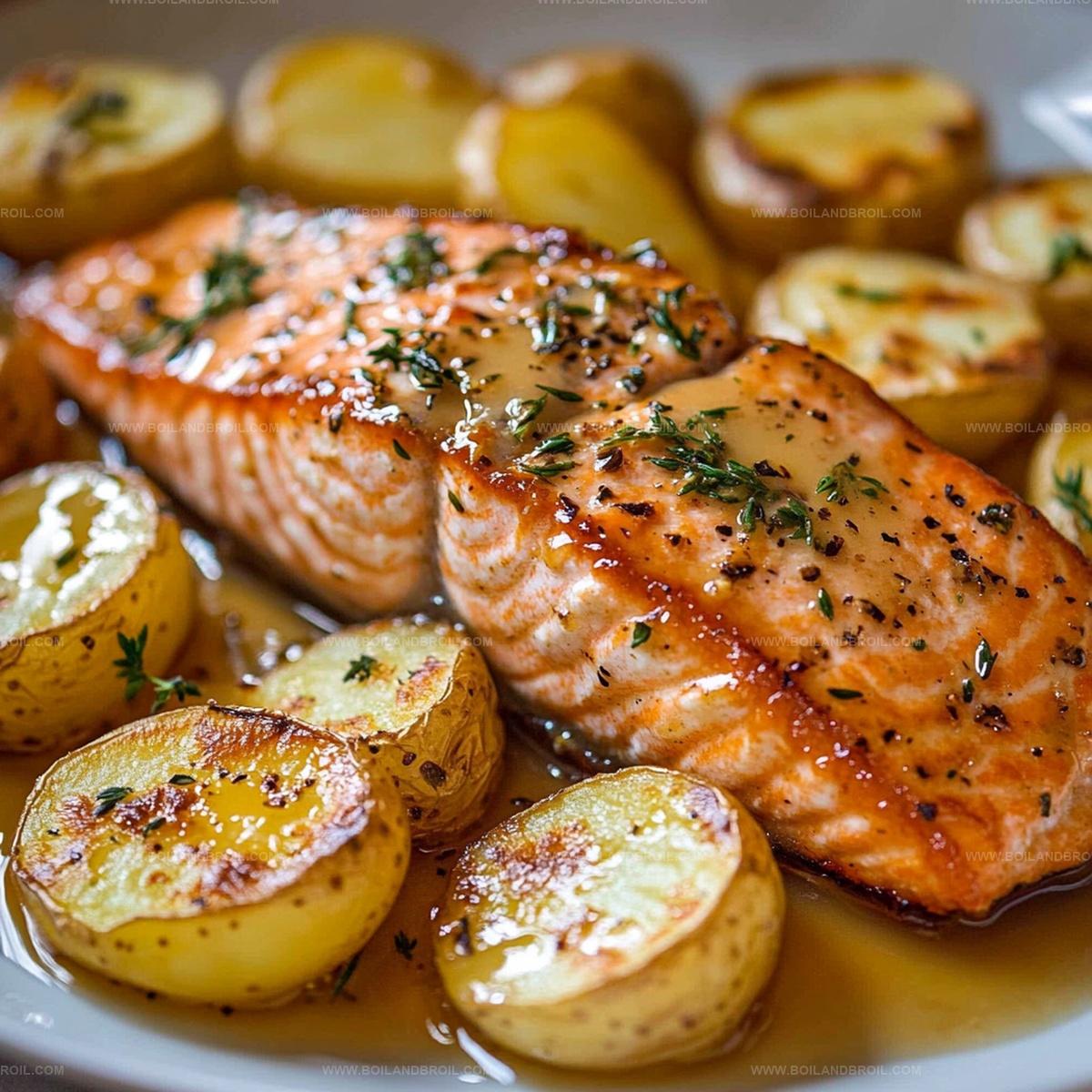
Tangy Maple Glazed Salmon & Roasted Potatoes Recipe

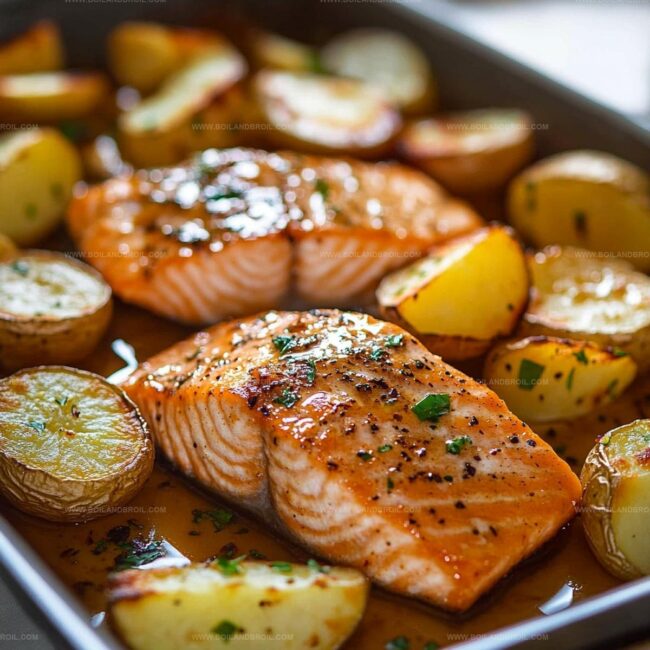
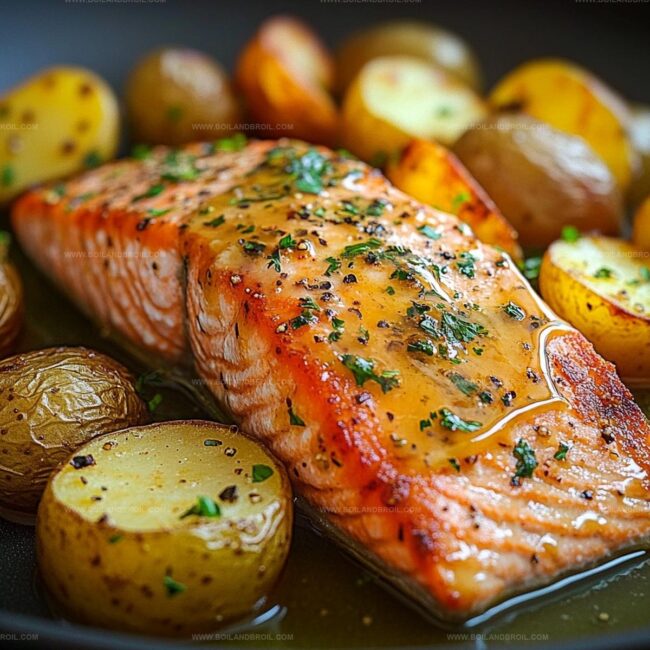
Succulent maple glazed salmon dances with crispy roasted potatoes in a delightful culinary symphony.
Weeknight dinners demand quick, satisfying meals that spark joy at the table.
Home cooks searching for simple yet impressive dishes will adore this combination.
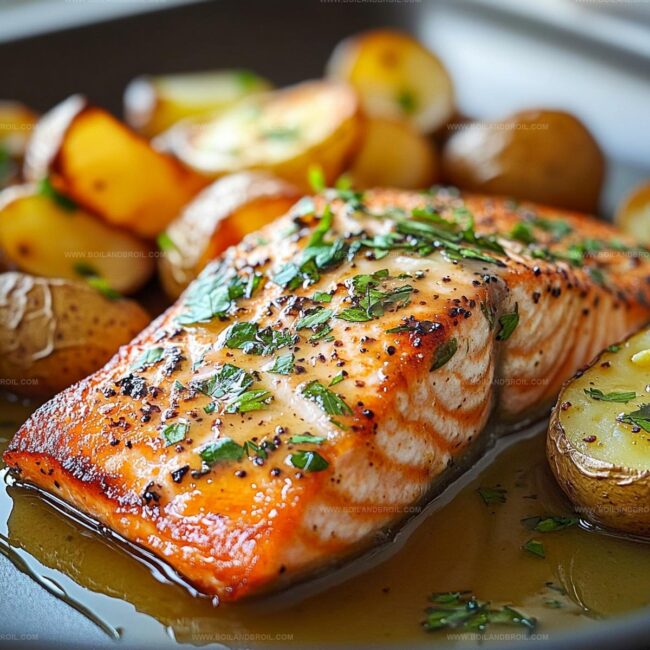
Pure maple syrup creates a golden, caramelized crust that elevates ordinary fish to extraordinary.
Perfectly seasoned potatoes provide a hearty complement to the delicate salmon rich flavor.
Minimal ingredients and straightforward preparation make this recipe a weeknight champion.
You’ll fall in love with how effortlessly these two components create a restaurant-worthy meal in under 30 minutes.
What Makes Maple Glazed Salmon with Potatoes Shine
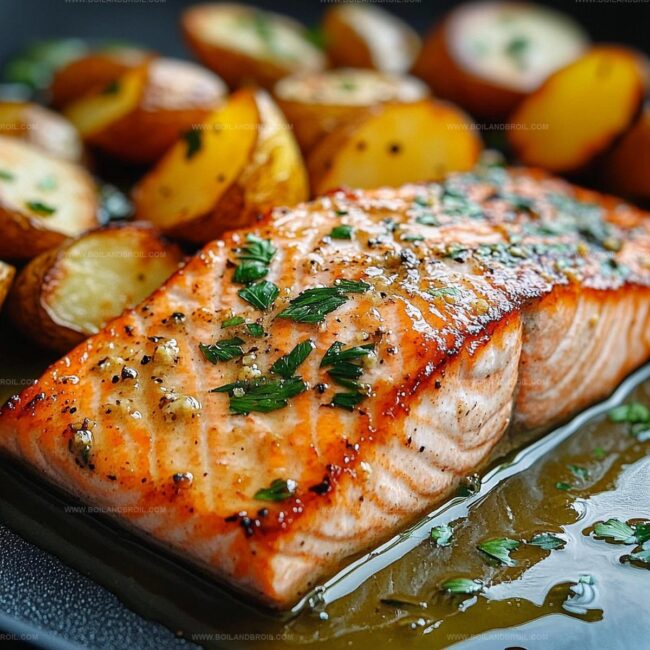
Ingredients for Salmon and Roasted Potatoes
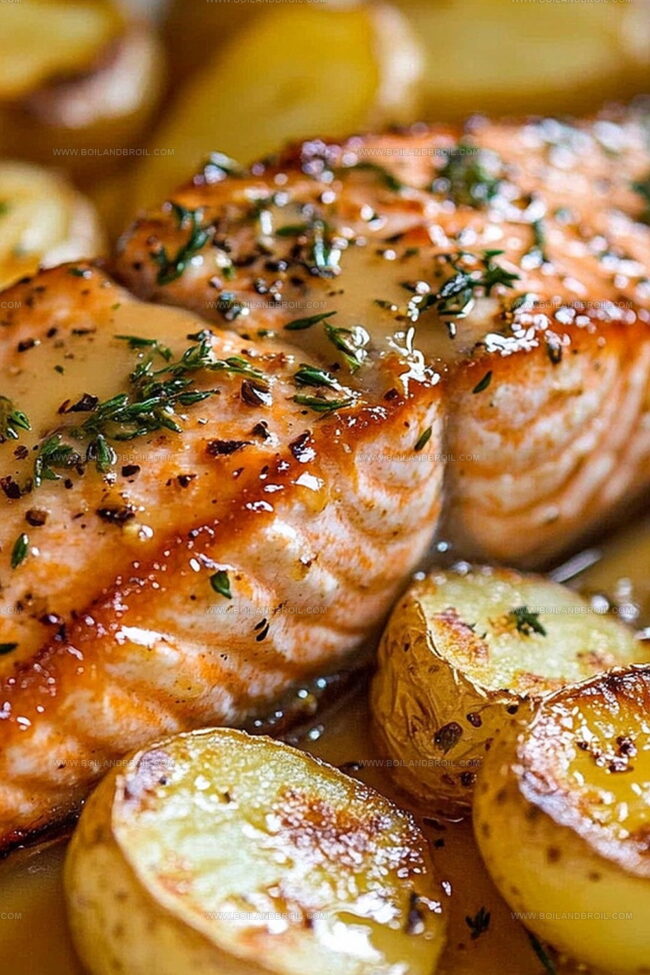
How to Make Maple Glazed Salmon & Potatoes
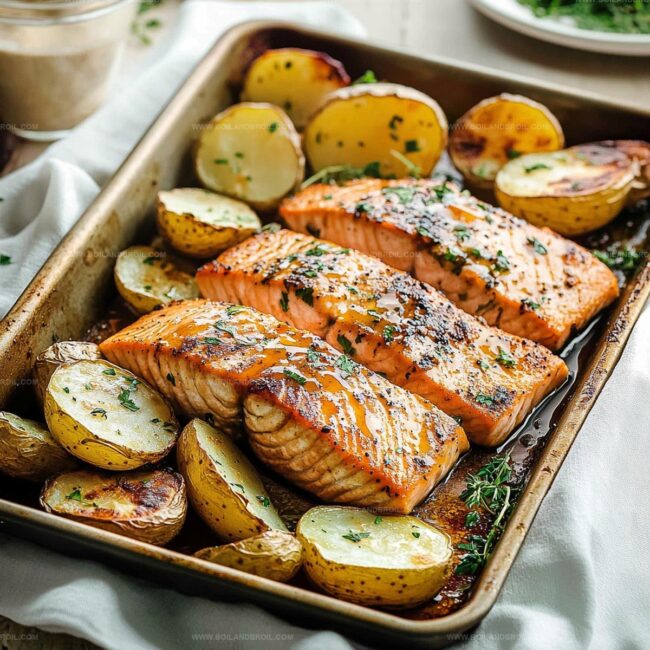
Step 1: Heat the Oven and Prepare Baking Sheet
Crank up the oven to a toasty 400F.
Grab a sheet pan and create a smooth landing for your ingredients by laying down parchment paper.
Step 2: Season Potato Chunks
Dive into preparing the potatoes by tossing them with:Spread the seasoned potato chunks across the sheet pan in a single, even layer.
Step 3: Whip Up the Maple Glaze
In a small mixing bowl, blend together:Stir until the ingredients create a glossy, unified sauce.
Step 4: Kickstart Potato Roasting
Slide the sheet pan into the hot oven and let the potatoes sizzle and transform for 15 minutes.
Step 5: Coat Salmon with Glazy Goodness
Take your salmon fillets and lovingly brush them with the maple mixture, ensuring every inch gets a delicious coating.
Step 6: Complete the One-Pan Wonder
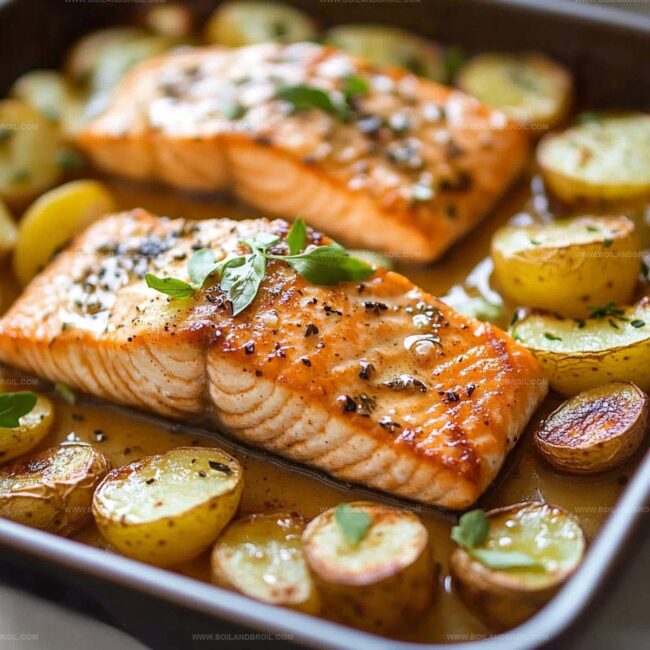
Pull out the pan after 15 minutes, flip the potatoes for even browning, then nestle the glazed salmon right alongside.
Return to the oven for another 10 minutes until the salmon is perfectly cooked through.
Step 7: Create a Delectable Plate
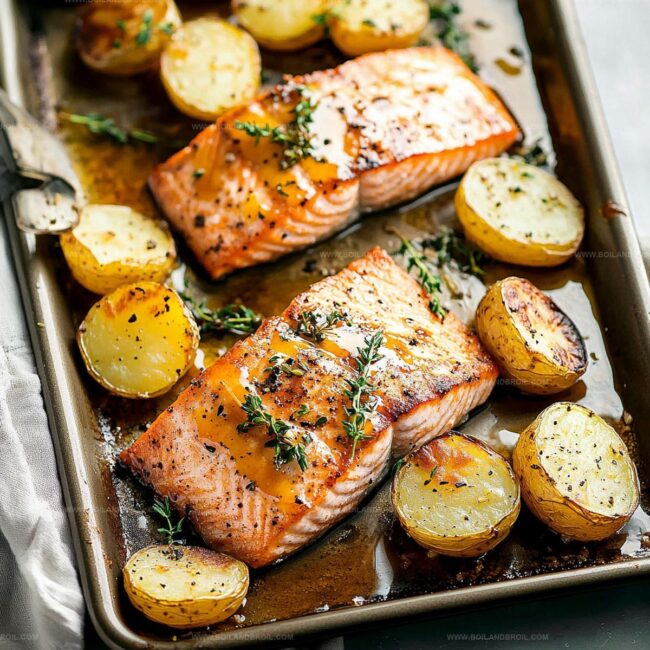
Transfer the golden-brown salmon and crispy potatoes to serving plates.
Add a bright pop of freshness with lemon wedges if desired.
Enjoy immediately while everything is hot and bursting with flavor!
Pro Tips for Glazing Salmon Just Right
Saving Maple Salmon and Potatoes for Later
What to Pair with Glazed Salmon and Potatoes
Ideas to Switch Up This Salmon and Potato Dish
FAQs
Yes, you can substitute salmon with other firm fish like cod, halibut, or trout. Just adjust cooking time based on the thickness of the fish.
While maple syrup provides a unique sweetness, you can replace it with honey or brown sugar if needed. The key is maintaining a similar consistency and sweet flavor profile.
Salmon is done when it turns opaque and flakes easily with a fork. The internal temperature should reach 145°F (63°C). The fish should look light pink and not translucent.
Absolutely! If you don’t have fresh thyme, use about 1/3 of the amount in dried thyme. Dried herbs are more concentrated in flavor, so a little goes a long way.
Print
Maple Glazed Salmon & Roasted Potatoes Recipe
- Total Time: 35 minutes
- Yield: 2 1x
Description
Succulent maple glazed salmon dances with crispy roasted potatoes in this elegant Canadian-inspired dish. Delicate fish meets sweet maple glaze, creating a harmonious meal you’ll savor with pure culinary delight.
Ingredients
Main Proteins:
- 2 salmon fillets
Vegetables and Starches:
- 1 pound (1 lb) baby potatoes, halved
Seasonings and Glaze Ingredients:
- 2 tablespoons olive oil
- 2 tablespoons maple syrup
- 1 tablespoon Dijon mustard
- 1 teaspoon garlic powder
- 1 teaspoon dried thyme (or fresh)
- Salt to taste
- Pepper to taste
- Lemon wedges (optional)
Instructions
- Prepare the roasting environment by heating the oven to 400F (200C) and lining a sheet pan with parchment paper for optimal cooking surface.
- Slice potatoes in half and coat thoroughly with olive oil, garlic powder, thyme, salt, and pepper, ensuring even distribution of seasonings.
- Create a glossy maple glaze by whisking maple syrup, Dijon mustard, and a delicate pinch of salt until smooth and well-combined.
- Spread seasoned potato halves across the prepared sheet pan in a single layer, allowing each piece maximum exposure to heat.
- Roast potatoes for 15 minutes, promoting crisp exterior and tender interior.
- Remove pan from oven, carefully flip potatoes to encourage even browning, and position salmon fillets alongside the partially roasted potatoes.
- Generously brush salmon with prepared maple glaze, coating each fillet completely for maximum flavor infusion.
- Return sheet pan to oven and continue roasting for an additional 10 minutes, or until salmon reaches desired doneness and potatoes achieve golden-brown edges.
- Transfer sheet pan directly to serving area, garnishing with fresh lemon wedges to provide a bright, citrusy contrast to the rich salmon and potatoes.
- Serve immediately while flavors and temperatures are at their peak.
Notes
- Always use fresh, high-quality salmon for the best flavor and texture.
- Pat salmon dry before glazing to help the maple mixture adhere better and create a crispy exterior.
- Adjust cooking time based on salmon thickness – thicker fillets might need a few extra minutes.
- For a gluten-free version, ensure Dijon mustard is certified gluten-free and use tamari instead of traditional soy sauce if needed.
- Cut potatoes in uniform sizes to guarantee even roasting and consistent cooking.
- Transform dish into a low-carb option by replacing potatoes with roasted cauliflower or Brussels sprouts.
- Enhance flavor by adding fresh herbs like chopped parsley or dill over the finished dish for brightness.
- Prep Time: 10 minutes
- Cook Time: 25 minutes
- Category: Dinner
- Method: Roasting
- Cuisine: American
Nutrition
- Serving Size: 2
- Calories: 480
- Sugar: 6 g
- Sodium: 350 mg
- Fat: 24 g
- Saturated Fat: 3.5 g
- Unsaturated Fat: 20 g
- Trans Fat: 0 g
- Carbohydrates: 36 g
- Fiber: 4 g
- Protein: 30 g
- Cholesterol: 70 mg
Jack Sullivan
Founder & Culinary Storyteller
Expertise
Single-recipe development with a narrative approach, Culinary storytelling and food history, Seasonal and regional ingredient utilization, Home cooking techniques adapted for modern kitchens
Education
New England Culinary Institute (Montpelier, VT)
Certificate in Culinary Arts
Focused on farm-to-table cooking, sustainable practices, and modern plating techniques.
Asheville-Buncombe Technical Community College
Associate Degree in Culinary Arts
Emphasized Southern Appalachian cuisine and local ingredient sourcing.
Jack grew up surrounded by smoky skillets and handwritten recipes in the mountains of North Carolina. His roots in Appalachian cooking shaped the way he sees food – as something that connects people, tells a story, and holds meaning.
With hands-on training and a background in sustainable, regional cooking, Jack started Boil And Broil to make meaningful meals more accessible. He’s all about one-dish recipes that are simple to follow but rich with flavor and history.